
.png)
Sukkah Wall Decor
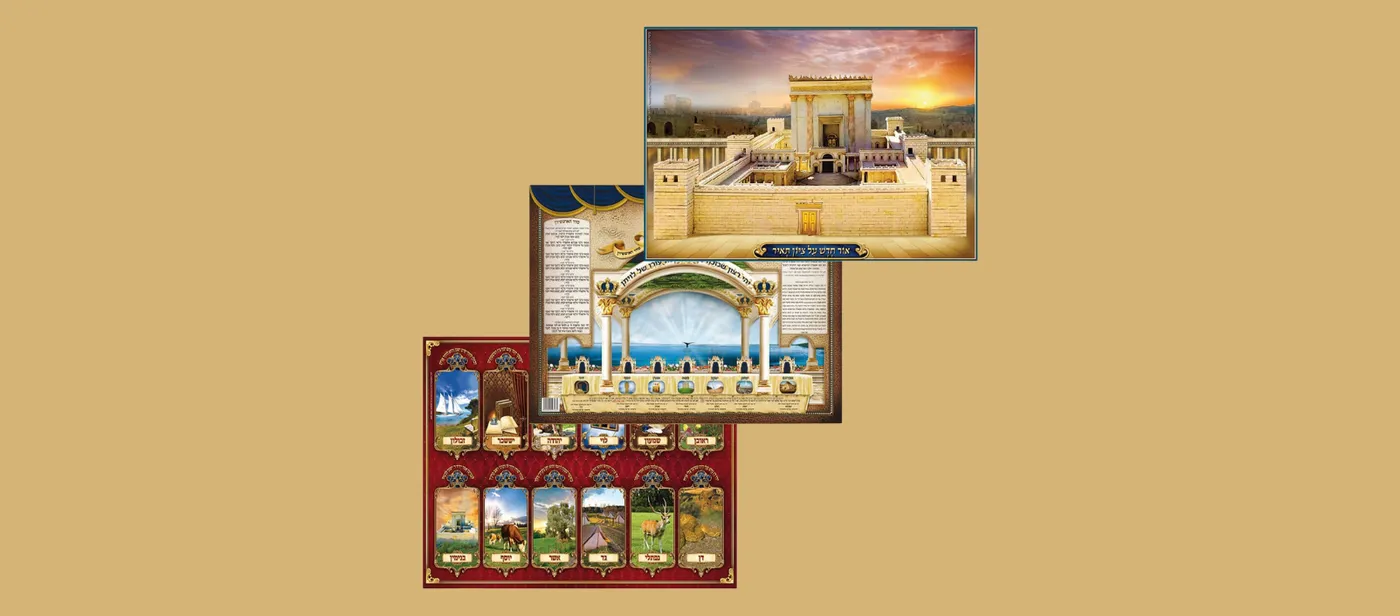
Posters

Tapestries

Wall Sculptures
Sukkah wall questions
What's the best way to cover bare sukkah walls?
A large tapestry covers the most ground fastest and sets the tone of the room. Posters fill the smaller walls and are cheap enough to add to each year. Metal sculptures add depth where a flat print would look empty. Between them, a sukkah wall is covered without anything looking crowded.
Posters, tapestries or sculptures — which should I buy first?
One large tapestry or a big print for the wall you face while eating. That single piece changes the room more than a dozen small ones, and it gives you an anchor to arrange everything else around in later years.
How do I hang wall decor without damaging the sukkah?
Fix to the frame rather than the wall panels, using clips, cable ties or S-hooks through grommets. Canvas and vinyl sukkah walls will not carry weight and tear where something heavy is attached, whereas the frame carries everything on this site without a mark.
How much does it take to fill a sukkah wall?
For a standard 8-foot wall, one large piece plus two or three smaller ones reads as full. Aim to cover roughly two-thirds of the wall and leave breathing space — a wall papered edge to edge looks busier and, oddly, cheaper than a wall arranged with some space in it.



.png)
.png)
.png)
